Aphrika
Heritage as a pattern language, not a costume.
The context
Apparel brands that draw on African visual culture tend to land in one of two places. Either the reference is flattened into a print sold back as a souvenir, or it is sanded off entirely until nothing distinguishes the label from any other streetwear.
Aphrika needed a third option. A pattern language specific enough to be recognisable and abstract enough that a customer buys it as design rather than as a statement about where they are from.
The challenge
A pattern that has to survive being worn
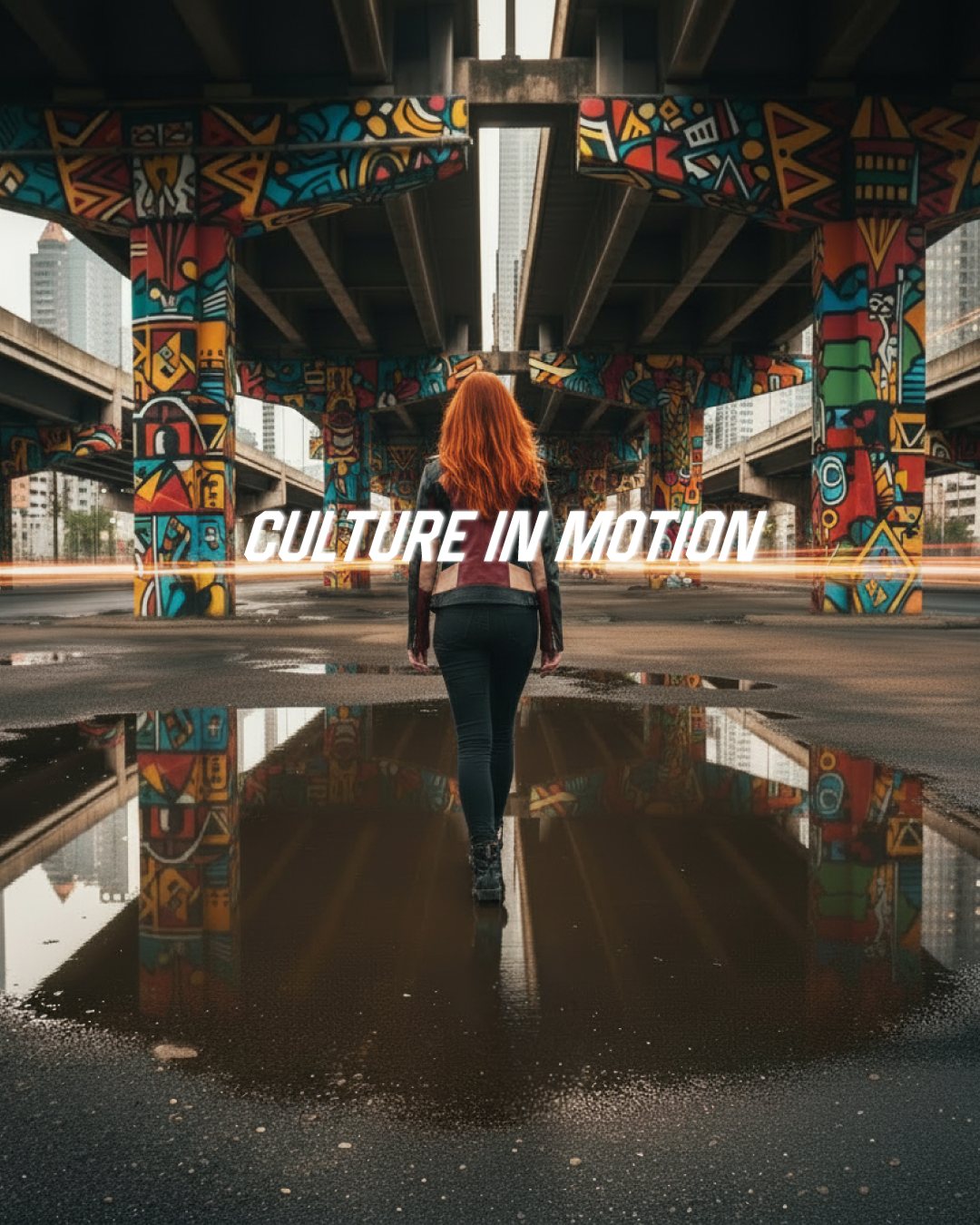
A dense multicolour pattern is easy to admire on a screen and difficult to wear. Put it on a whole garment and it becomes a costume. Shrink it to a chest print and the detail turns to mud in the wash.
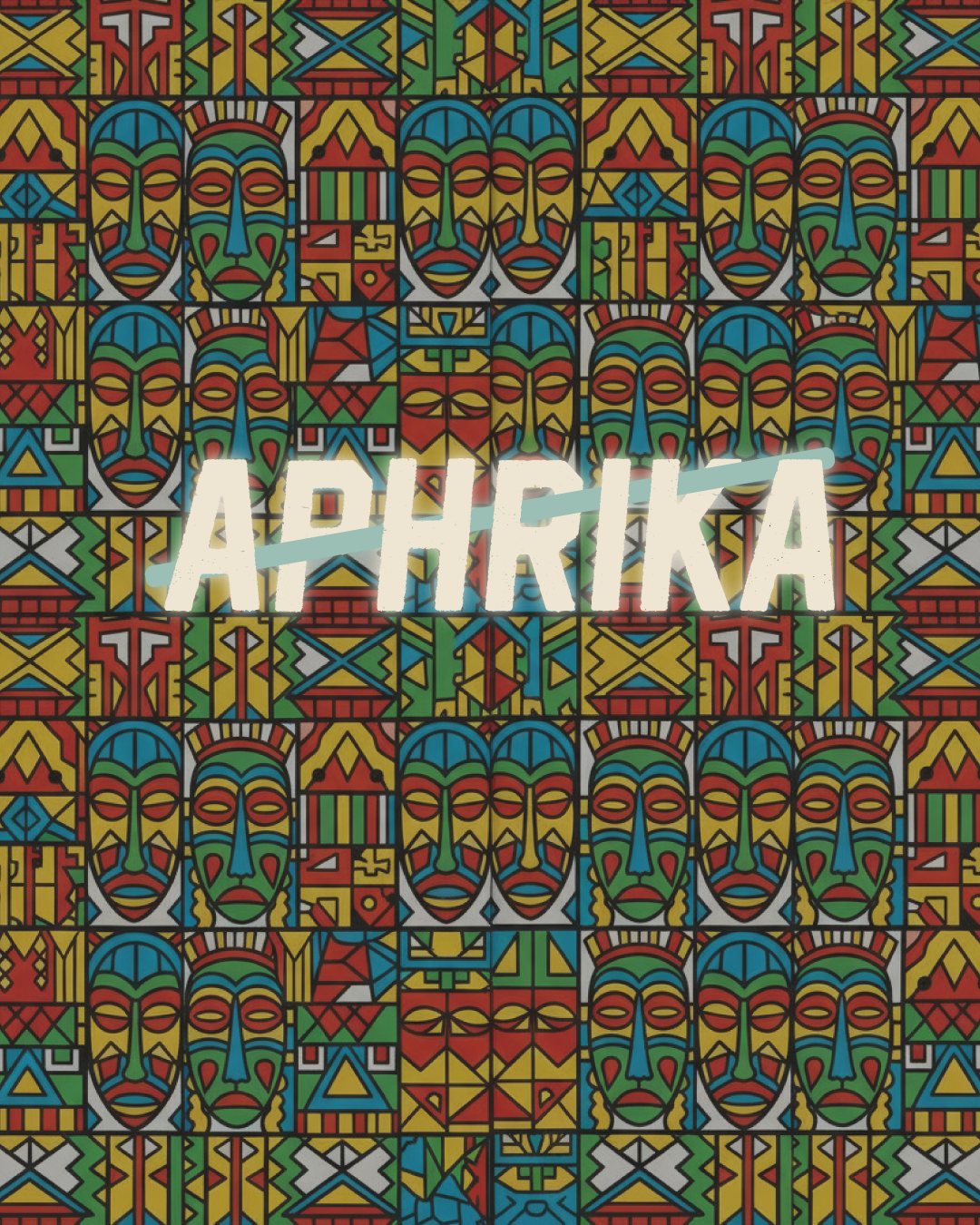
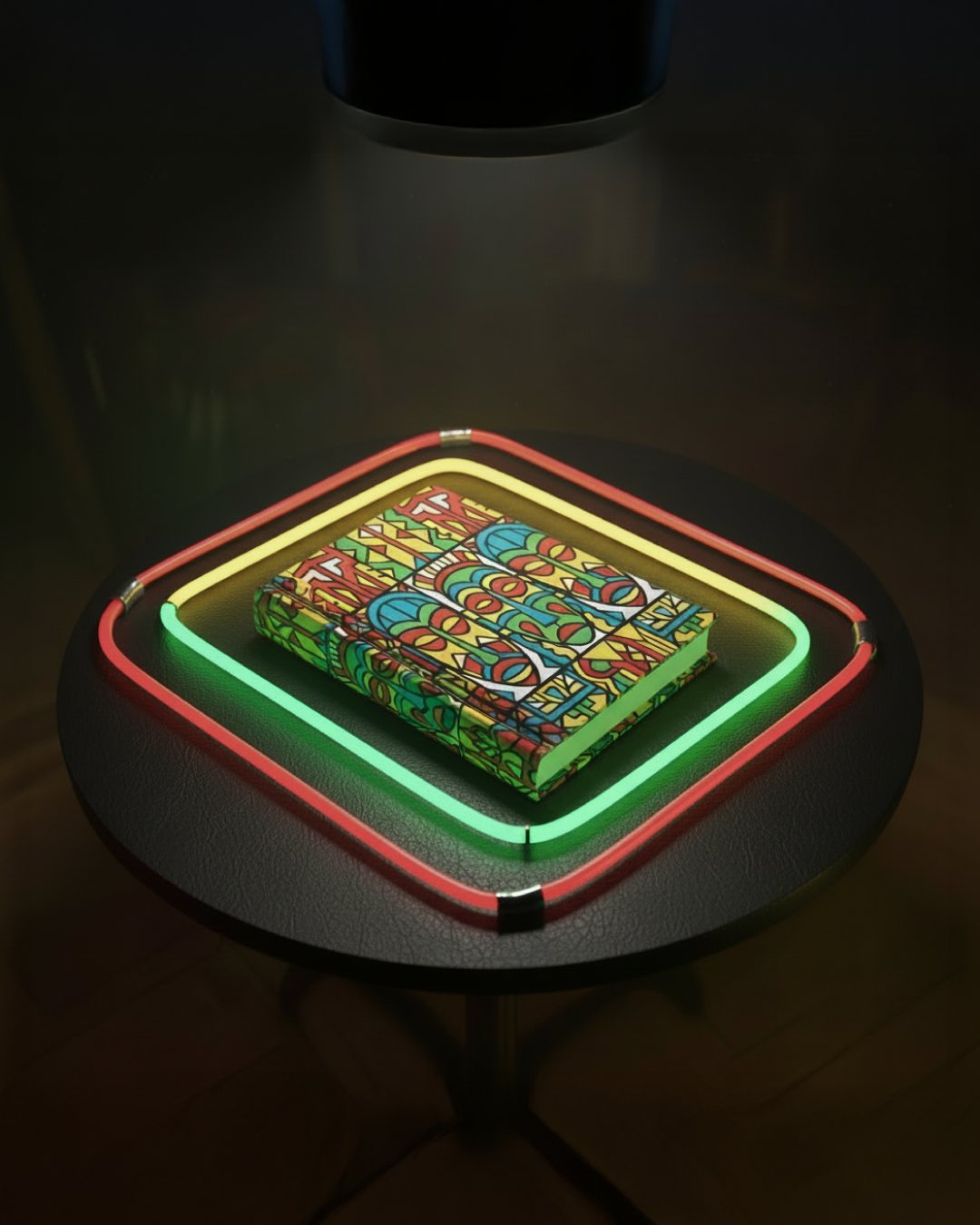
So the pattern was built at three scales from the start. Full bleed for packaging and campaign, a mid scale for linings and interior facings, and a single extracted motif for anything embroidered or printed small.
The approach
Culture in motion, taken literally
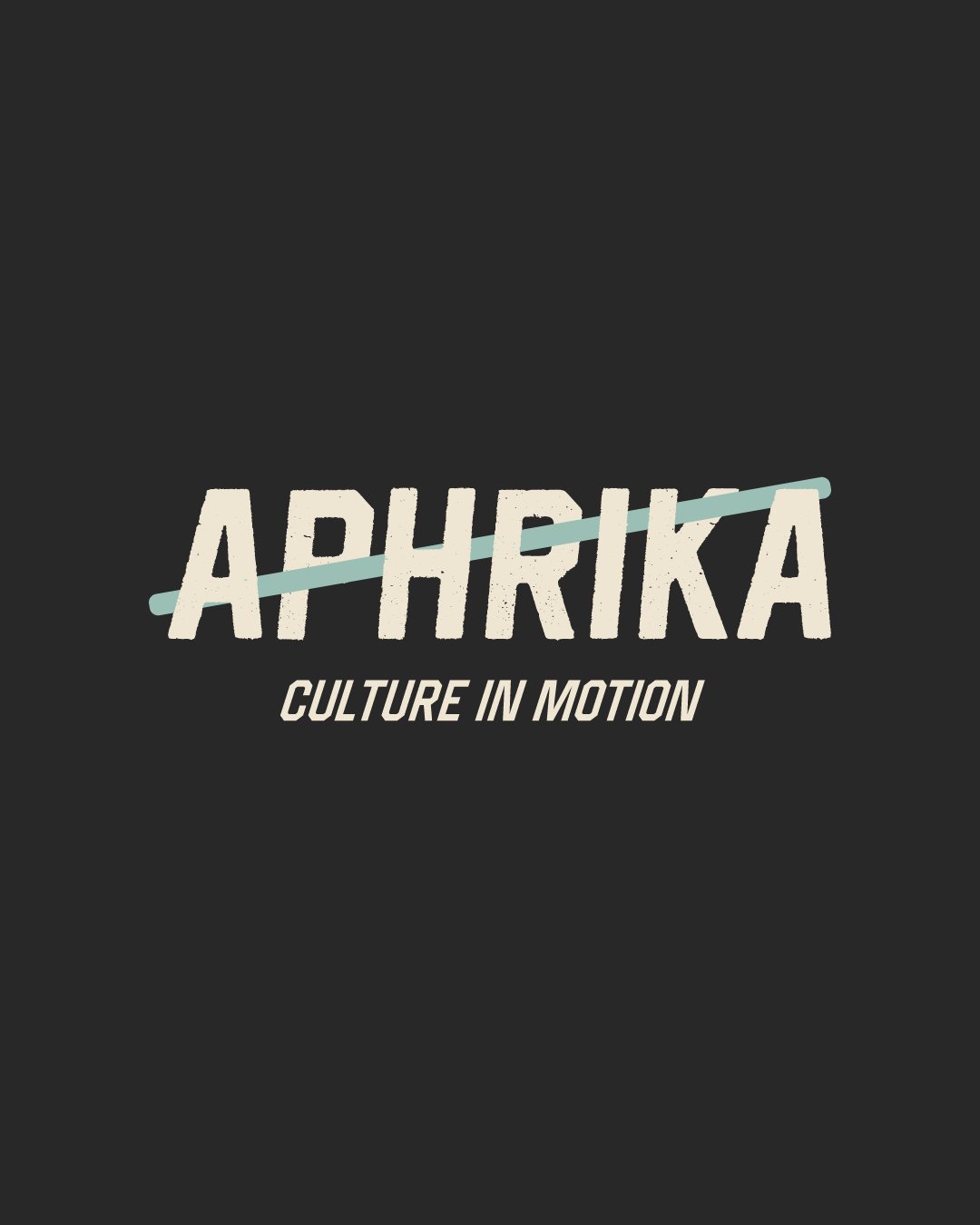
The line the brand runs on is culture in motion, and the identity treats it as an instruction rather than a slogan. The wordmark is a heavy condensed sans with a single stroke cut through it, so the mark itself is caught mid movement.
The pattern is built from mask and figure motifs redrawn as flat geometry on a strict grid. Nothing is traced. Every motif had to survive being reduced to four shapes, which is what stops the print reading as clip art.
Colour is where the heritage lives and the garments are where it is held back. The pattern carries the full palette. The clothing does not.

Campaign direction
Rooms with a history in them
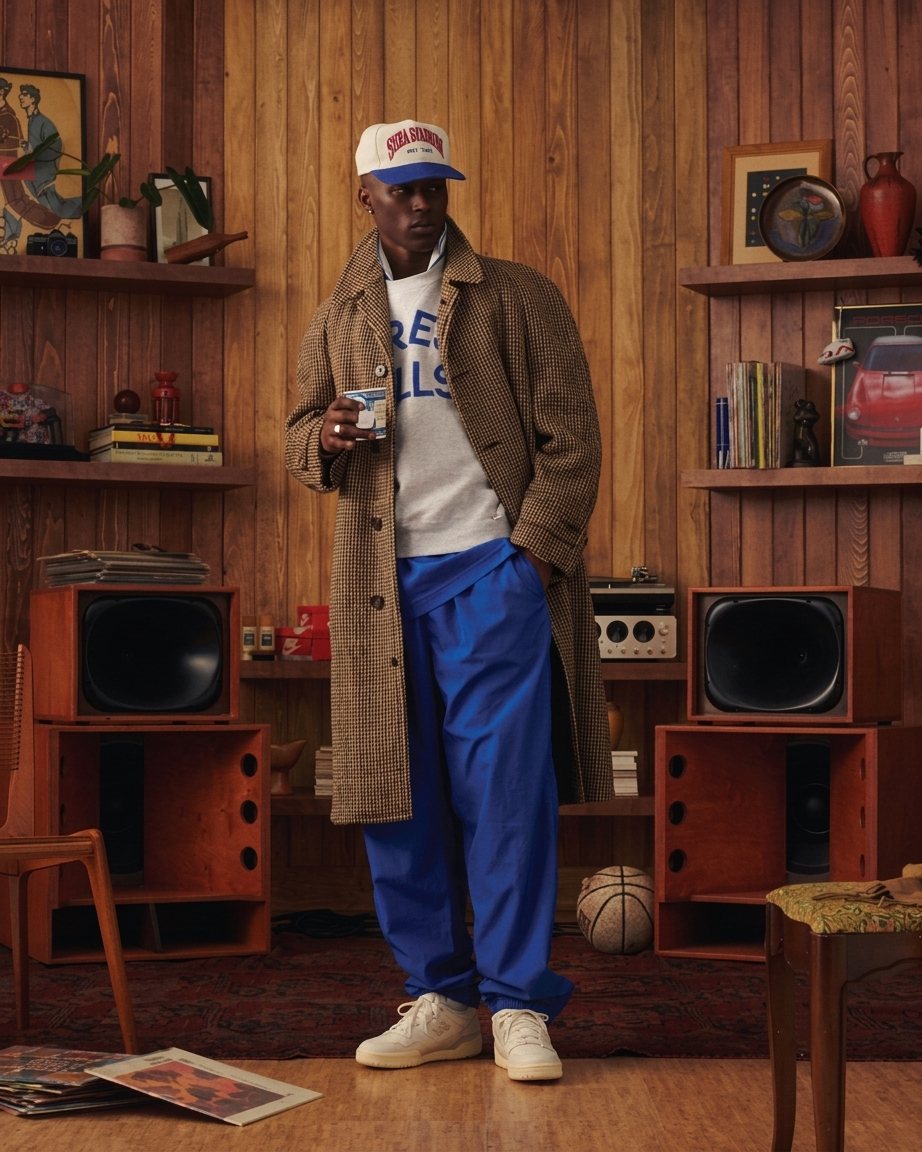
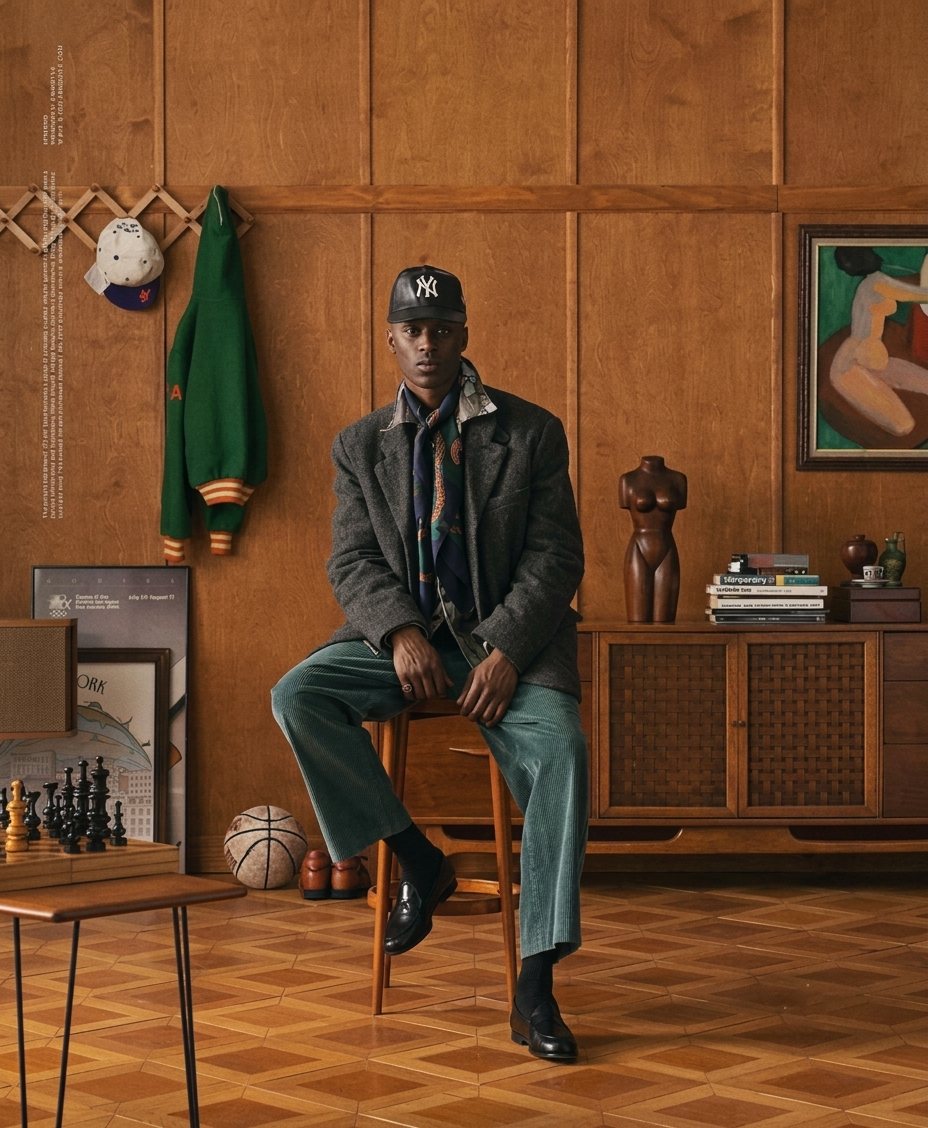
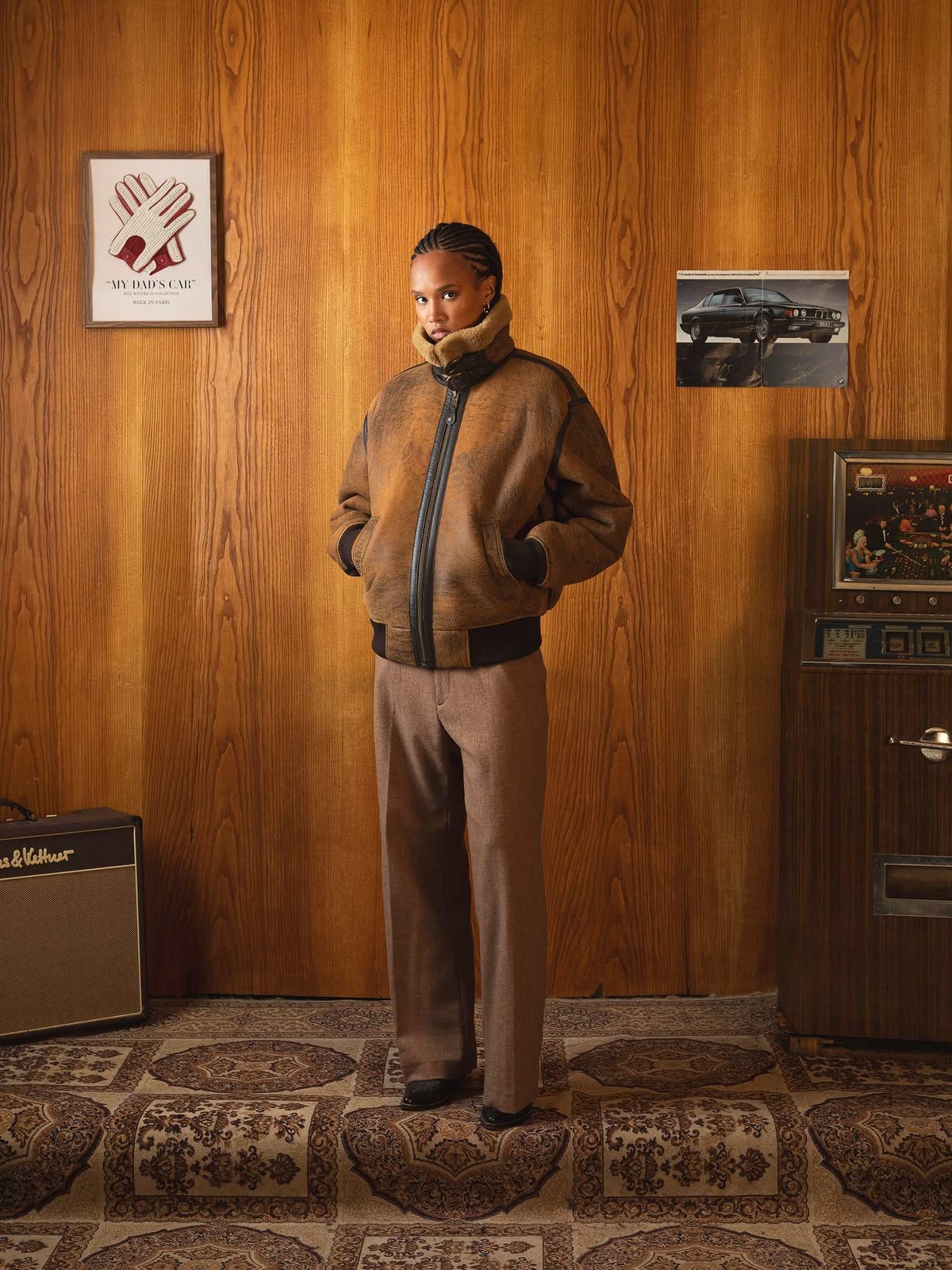
The lookbook is shot in wood panelled interiors with shelves of books, records and objects that were clearly there before the clothes arrived. Nothing is styled on a seamless.
That decision does the positioning work the pattern cannot. It places the brand in a domestic, inherited setting rather than on a runway, which is the difference between heritage as something you live with and heritage as something you perform.
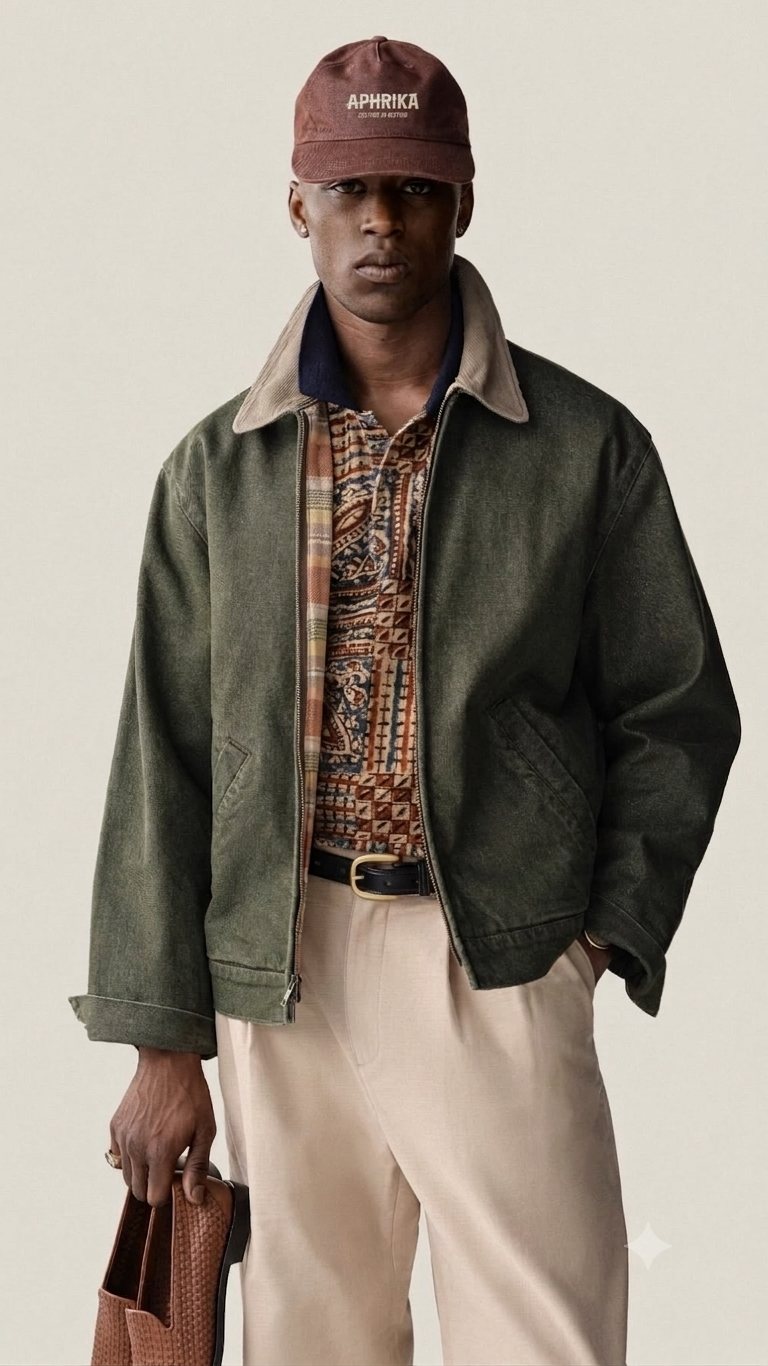
Every motif had to survive being reduced to four shapes. That is what stops the print reading as clip art.Aphrika, culture-led apparel
Specification
- System
- Cut wordmark · three-scale pattern · extracted motif
- Palette
- Full spectrum in print, restrained on garment
- Deliverables
- Strategy · Identity · Pattern system · Lookbook direction · Packaging